Sunday, February 19, 2012

10 things we miss most about US

I hear that some of you started packing your bags to come here after reading my previous post about 10 things we really like in Israel.  It is indeed a fascinating country that is also very pleasant for a visit or stay. So, please come!

However, I am trying to paint an honest picture of our adventurous immigration.  With the excitement of the new life there is obviously a nostalgia for the old one. Here are 10 things that we miss most about US right now, six months after the move.

  1. Friends. We all try to stay in touch via email, skype and phone but with a 7-hour difference and a shifted weekend (Friday-Saturday in Israel and Saturday-Sunday in the US) is it hard.  New friendships are slow to appear. People are warm and welcoming. However, here in Israel everyone is surrounded by a large and a tight family circle. Then, there are friends one grew up with - school, army, university. Who needs additional friendships when the weekends are so short? We were surprised to find that most people around are not interested to cross the boundary between acquaintanceship and friendship.
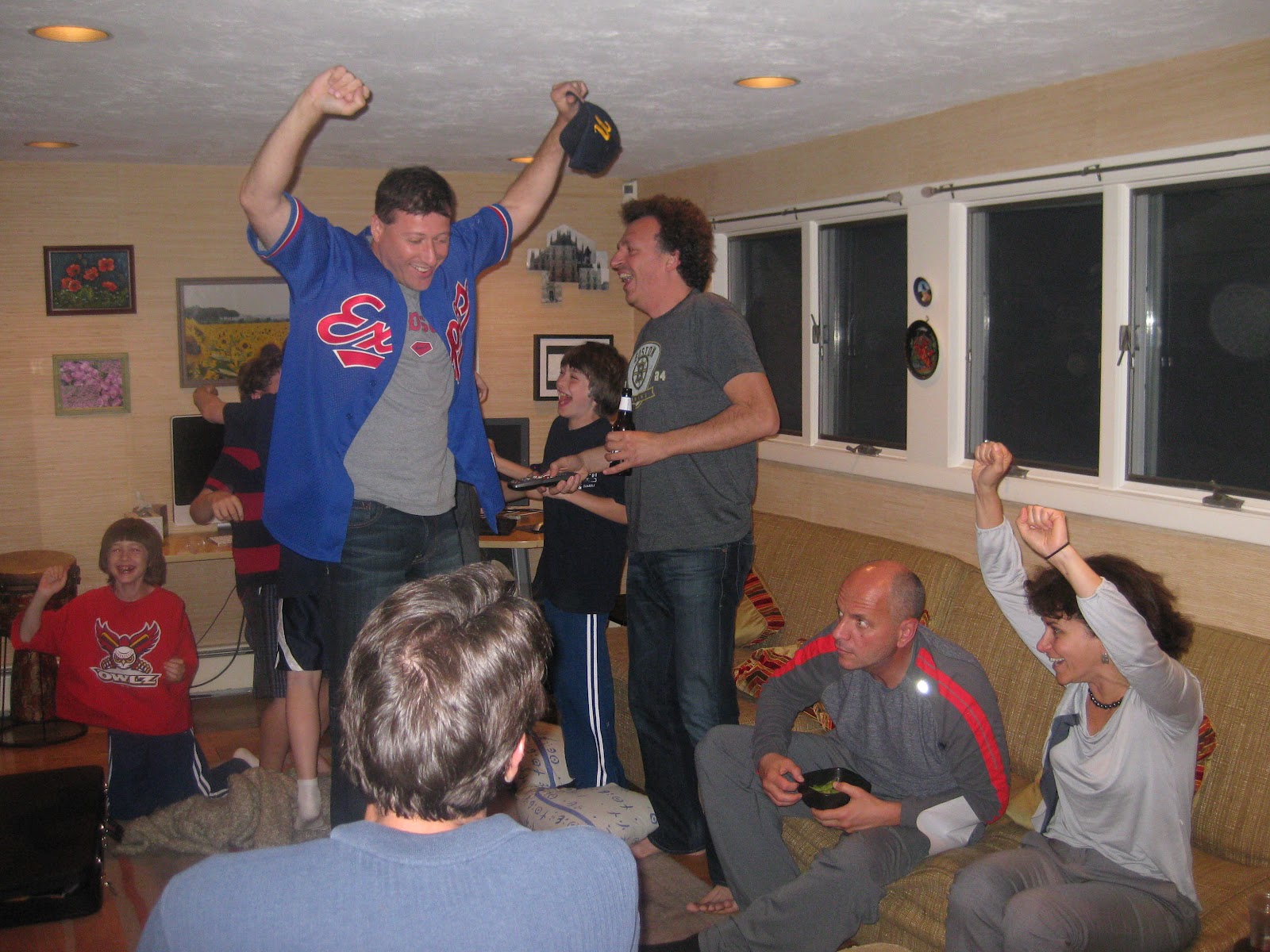
  2. Boston's sports frenzy.  We still are part of the Patriots, Red Sox, Bruins and Celtics Nation. We feel the pain of the Patriot's Super Bowl loss but have no shoulder to cry it on. We watch games deep into the night, wear T-shirts, read Boston Globe and pack our emotions into emails to our Bostonian friends.   Israeli sports scene is also contentious and engaging but it will probably take us years to get hooked.  
    2011 Bruins' victory
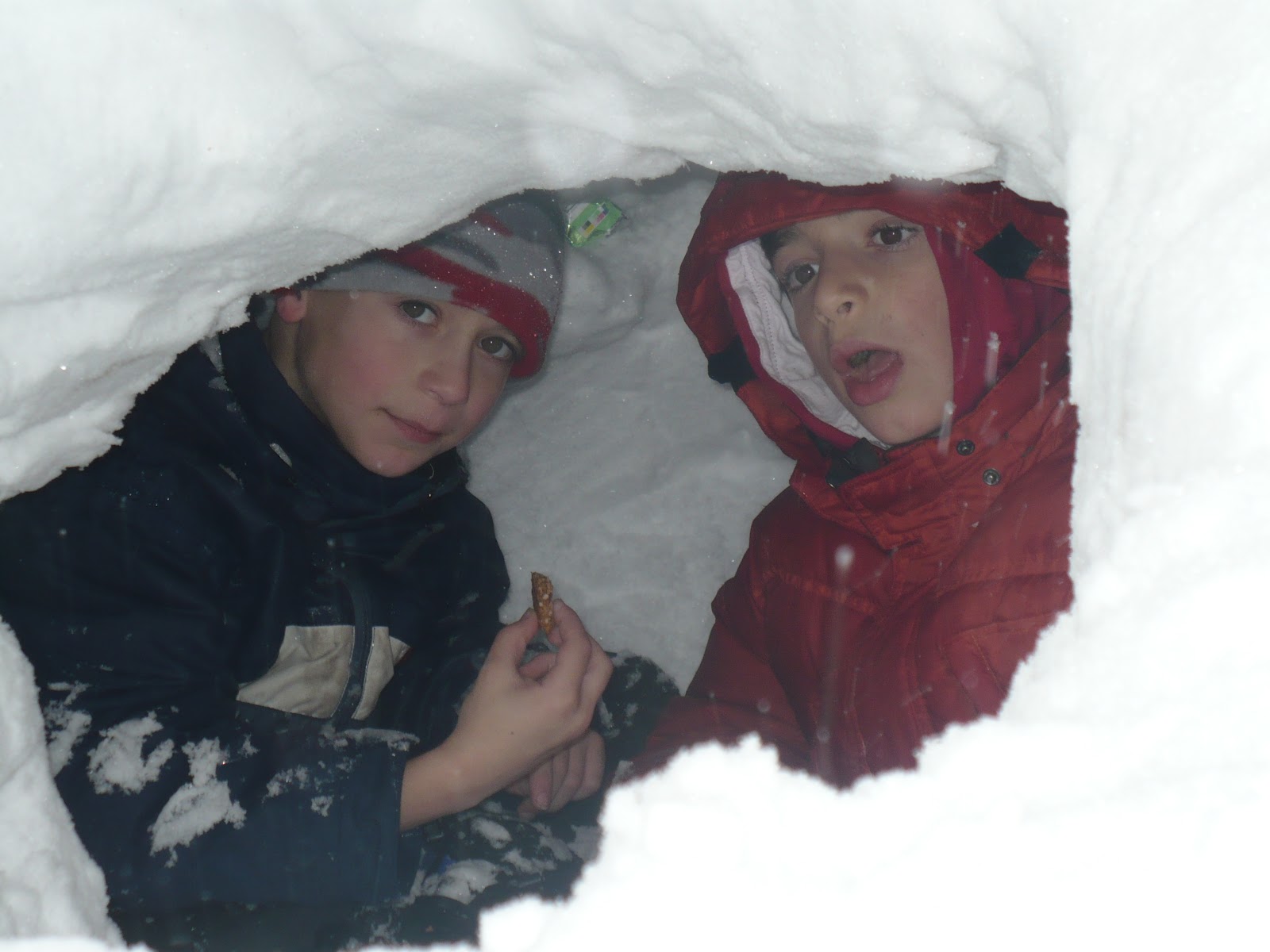
  3. Naor misses winter, especially the sunny Boston snow days when he could play outside with the friends bundled in a snowsuit building snow forts, fighting snowballs, sledding from the high-school slopes. 
  4. Kids miss quiet and discipline at school and frequently come home tired from the noise. Large classes (27-40 kids) and non-strict rules lead to teachers spending 1/3 of the lesson time screaming for silence. Yes, screaming for silence...
  5. We (parents) miss longer school day and more homework.
  6. Not worrying for our survival. In the US you worry about keeping your job, lose your sleep thinking about your mortgage, or stress over saving enough for summer vacation, afterschool activities or college. All these worries are valid here as well, but can be obscured by a helpless worry of a potential war. Is Israel serious about bombing Iran? Is Iran serious about sending rockets to Tel Aviv? Where will these rockets fall? Unfortunately, the only things we can do is finding where the nearest bomb shelter is and ordering gas masks from the town hall. Fortunately, we are slowly getting used to living in uncertainty and this doesn't affect our daily mood.
    Gas masks for adult, youth and baby...
  7. Better hospital conditions. While the professionalism of doctors and nurses is comparable with the US, the luck of resources in government-ran socialistic medicine is felt everywhere - number of people per hospital room, ratio of patients per nurse and therefore attention that every patient gets, hospital food and equipment. 
  8. Trader Joe's - there is nothing like it in Israel. I believe that Trader Joe's is the working parents' friend allowing to spend minimum time serving delicious, rather healthy, not expensive, kids-friendly and interesting meals.   Without it I find myself constantly busy with feeding a picky family of five from raw ingredients.
  9. Variety and simplicity of online shopping. In the recent years in Boston I almost stopped going to stores altogether (except Marshalls, TJMax and Filene's Basement). Why spend 60+ min driving, parking and browsing through Toys-R-Us, Mac Cosmetics, or West Elm when you can order anything online in 5 mins? Surprisingly in such high-tech country like Israel online shopping is in the embryonic stage. Every little purchase is an hour-long project.  One of the problems is that postal workers do not come with a car and do not carry any packages. There is also a heavy taxation on the US-ordered stuff. 
  10. US Holiday Spirit. We did try celebrating Thanksgiving this year. Since no one in Israel is usually buying a whole giant turkey,  I had to order it from a supermarket a few days in advance. The turkey did not look at all like a fat American bird, it was an anorexic dead creature with a long neck. My husband's mistake of asking the butcher to remove the bird's skin turned it into a horror picture. We did cook it and ate it but I am still asking turkey's forgiveness for these deeds.  Move here did earn us Jewish holidays with the family that we have been longing for for so many years. But we still miss the other holidays - the sweet anticipation of Halloween, Thanksgiving flavours, the Christmas cheer on the streets and shops, an Independence Day with a parade, 5K run and fireworks in our town. These are part of the traditions our kids were born into and we all enjoyed for so many years.  

Wednesday, February 15, 2012

10 things we like in Israel (more than in the US)

  1. Food. As everywhere around the Mediterranean, food  in Israel is a top priority and investment. It is elaborate, flavorful, and usually spicy. It is also pretty much the only thing that unite everyone in the region: Arabs, Jews, Christians, Druzes; secular and religious people; political right and political left.


  2. Friday rituals. For the secular crowds in Israel, Friday became a sacred day, much more special than Shabbat.  Most of the adults do not work.  Kids are in schools or day-care till around noon. The adults enjoy these few hours of freedom by relaxing in coffee shops with partners or friends, then stopping at the neighborhood markets to buy Shabat hallah, weekend newspaper, flowers, pastry and other last-minute food.


    The majority of shopping is usually done in advance. Then, there is cooking for expansive Shabat dinner or anticipation of going over to the parents' house, Galei  Zahal radio in the background. Those who do not cook, enjoy a sweet rest in the afternoon. And at night, everyone puts on festive clothes and goes over to meet the rest of their families for large, noisy, late and delicious dinner. For young adults this all is just an prelude to continuing the night by going out with their friends. They get back home only around 2-4am and sleep till noon on Shabbat.
  3. Public display of affection.  Parents are openly "devouring" they kids on the school steps or playgrounds, while kids comfortably enjoy it and giggle. Relatives express love for each other openly in person or on the phone. Even our kids started saying "I love you" to us a few times daily. Adult men can greet each other with a kiss without any embarrassment. Lovers behave like there is no one around, sparking the air with affection and sexuality.

    Image from Flickr, distributed under CCL.
  4. Warm clean sea and fantastic beaches
  5. Passion for life. It may be the warm and passionate Mediterranean blood, an antidote to the daily political stress, or something else, but Israelis live to the fullest.  Even on the weekdays, even those with kids, all eat, drink, laugh and party till late. Fun opportunities are never missed for the sake of sleep. Tel Aviv is rightly advertises itself as a city that never stops.
  6. Flower bloom instead of snowstorms in February.

    Image from Flickr, distributed under CCL.
  7. Relationships: warmth, hospitality and easy-going. Anyone and anywhere you are visiting, you can expert to be seated and fed anything from a coffee-and-cake to a full meal. If you run out of eggs, salt or sugar - feel free to knock on your neighbors door. Pregnant or visibly sick, everyone - garbage men, market sellers, bank employees, or supermarket bag packer - will be wishing you a safe and healthy delivery and a quick recovery.
  8. Strong women. They work (even with 3-5 kids), they manage kids-school-babysitter-activities logistics, they cook (very well), they do most of the housework, they dress well and look great, and they mostly spoil their husbands. They are smart and opinionated leaders.
  9. Playground gyms - sportex.  Someone somewhere got an ingenious idea that in a country like Israel with mostly sunny and warm weather gyms should not necessarily be indoors. Now you can find adult gym equipment corners in every park. Why not build some strength,  while your kids are playing at the playground?   Why not work on the muscles after finishing your morning jog or on the way to work?

  10. Abundance of exotic fruits and vegetables. Brown tomatoes, spherical zucchini, sabres, papaya, kiwi,  guava, anona, persimmon, pomelo etc. And if you, like me, do not know what to do with them, any shop seller or fellow shoppers will gladly offer you a few recipe suggestions.


    Image from Flickr, distributed under CCL.
Next to come - 10 things we miss most about US

Thursday, January 5, 2012

Motorcycles Are Everywhere

Yesterday I was in a minor car accident.  A taxi I was in had to cut sharply to the right lane to avoid crashing into a car that carelessly switched into our lane from the left. Just as I was about to compliment the taxi driver on her great reaction, we saw a black shadow on the right, heard a boom and saw our broken right rear-view mirror.  The motorcycle that crushed into us was on the asphalt behind us and in the darkness of the winter evening it was impossible to see whether the rider was moving at all. Another car stopped, and driver in a high heel boots rushed to assist the motorcyclist across few lanes of a heavy traffic. In a minute or two he stood up, walked a few steps and ensured everyone that he and the motorcycle are perfectly fine. Some plastic did fly off from his motorcycle but it appeared to be fully functional.  My driver and the motorcyclist exchanged the insurance information and separated in a friendly way.

Such accidents seem impossible to avoid in Israel.  Cars are driving almost glued to each other, with only a foot distance in-between. In such proximity, any impulsive change of speed or direction by one driver immediately affects every car around. And of course there are motorcycles. At any given moment you can spot ten of them on the road around you. Because they are cheaper while cars and gas are tremendously expensive in Israel. Because, like in Manhattan, parking is expensive and impossible in most of the main Israeli cities. And because you can get anywhere much faster on a motorcycle. They are allowed to sneak in-between the cars standing at traffic-lights or moving on a freeway.  You should always be ready for  motorcycles swooshing by your car on the left or right, or both sides simultaneously, like fighter jets. As much as I hate this slogan, I am constantly pronouncing it in my head here in Israel - Motorcycles are everywhere!


And you can spot anyone on a motorcycle or a scooter: pizza or flower delivery man, business woman in a skirt and high-heels, a man with an 8-year-old child behind him, a very big person, a student with a dog, religious person with tziziot waving behind him, or someone wearing only a bathing suit and a helmet. I really wanted to create a collection of snapshots of colorful Israeli motorcyclists, but this would require spending a day at the main intersection and with a small baby at home it is impossible.

Parking is another interesting topic. All Israeli drivers are experts at squeezing their cars in the smallest possible space from any potential direction. And they manage to do this in the shortest amount of time.  Just imagine yourself doing parallel parking on a one-lane street when tens of drivers are beeping to hurry you and motorcycles are sneaking from all directions. You have to be fast.

Such tight parking and many bumper accidents explain why the majority of cars have small dents or color scratches. It is almost impossible to get in or out of a parking spot in Tel Aviv without kissing the butt of the car in front of you or the face of a car behind you.

I was at the doctor's office recently and when I came out I saw that my giant Toyota Sienna parked along a curb is bordered (front and back) by two parked cars with a 10cm (~4") distance to each.  Sienna is long and wide and I didn't believe I could get out from this accidental trap. I tried looking for the owners of the culprit cars, honking to get their attention but no one appeared. Two young rough-looking  men in their car drove by looking at me with pity and one showed with his finger around his head agreeing with me that the driver that came last and blocked me must be a koo-koo. I wasn't sure what to do. Can the police help? How long will it take? A few minutes later I saw the same guys in a car driving toward me again. They must have circled the neighborhood.  To be honest, I got a bit scared... The street was completely empty aside from me and them. I contemplated whether I should get inside my car. When they approached, one of them got out and offered to navigate me out of this trap. He ensured me that with his help my car should be capable of getting out with only touches to the other cars' bumpers. True to his words I was free in a few minutes after a number of back-and-forth maneuvers. I wondered if this may ever happen  in the US where these strangers would likely be in a rush or afraid to help me and be accused by the surrounding car owners. In Boston I had been stuck in my cars a number of times, occasionally with little kids in the back seat. Few people stopped to help each time, but all of them were our friends from school or day care. Strangers had never offered any assistance. And thinking of it, neither did I.

Thursday, December 8, 2011

4 months progress

A few weeks ago the kids stopped saying their heart-breaking "When we go back to America" sentences:
"When we go back, can we live in the same town we used to live?"
"When we go back, can we go to the same school?"

They are doing well and feeling much more confident in school, and finally are able to navigate through the not-so-consistent class schedule and homework assignments. New for us all - homework, exam schedule and all the updates are posted on a school website for which each kid has a login. It took a few months for our 8-year-old to figure out how it all works and now she finally feels secure and proudly independent.

We can spot some buds of close friendships that kids begin to develop here, but the nostalgia for their friends and life that they had left in the US is still strong and painful.  It seems that the older the child the more difficult it is to penetrate the already established circle of friendships at school because class lists are kept the same from year to year.  The older the child, the more of a language depth and common experiences he needs to establish strong friendships.  In Boston, so much of the boy activities centered around playing or talking about sports - Patriots, Celtics, Red Sox.  The language of sport is rather different here.

A major source of happiness for the kids was discovery of  American-style bagels, Philadelphia cream cheese and Wacky Mac&Cheese in a local supermarket.  Now the kids miss only their US friends.

While our parents visited us in the US yearly, the kids never had strong connections with them because of the short visit time, impatience in overcoming the language barrier and busy schedules. Now, partially due to the lack of local friends and partially due to kids' growing confidence in Hebrew, the grandparents and the kids are re-discover each other. First time I see our kids voluntarily call their grandparents and request their visits. The kids genially enjoy grandparents' company - playing games, talking, traveling, eating together.  And from the grandparents side it is no longer just hugs and kisses (from the Sephardic side of the family) and critique of kids manners and behavior (from the Ashkenazi, Russian, side) that we witnessed during their US visits; there is a real connection and understanding of kids' worlds.

I fill silly to admit that I was and am no longer alarmed by every ambulance siren and do not rush to check the news asap, imagining a terrorist attack somewhere nearby.  I am finally ready to explore a crowded open street market or a shopping mall without major safety hesitations. Here is a savory meal that I split with my sister-in-law at a Turkish cafe in a vibrant Carmel Market.


We enjoy daily sunshine, warmth and colorful year-around blossoms. In the last months in our Boston suburb, waking up in a quiet of a morning with birds chirping, I thought that we will never be able to enjoy the same in Israel.  It is true that the central part of Israel is much more crowded and you are more likely to hear your neighbors' whereabouts than birds' songs. But here we are, in Tel Aviv, waking up with a bird chirping and the birds are no less beautiful than in Boston.

Tuesday, November 22, 2011

New baby: here vs there

Baby-girl Nili was born on November 2nd in the Ihilov Hospital in TelAviv, a few days ahead of the scheduled C-section.

First, there was her name selection, and it was not easy. Feeling loyal to all the cultures and languages we come from and speak, we wanted a Hebrew name that sounds pleasant in English and Russian. Moshe and the kids insisted on the name to start with "N" like Naor and Nadia. Kids didn't want the name to remind them of anyone they don't like. Grandparents had to approve the name. And with a short last name like ours we needed the first name to have at least two syllables. The beautiful Hebrew name "Noga" was out of the question because Noga with emphasis on "a" means a leg in Russian. Another name we really liked - Naomi - was ruled out as it is pronounced with a different emphasis in English and Hebrew and we decided to spare the correction work from our daughter. You see, it is miracle we came up with a name at all and managed to maintain peace in the family.

Second, there was delivery. Ihilov hospital is one of the largest hospitals in Israel, it does 11,000 births each year. Exactly like with our American-born kids, Nili decided to break the waters a few days of the scheduled C-section. The admittance and surgery went quite similarly to the US hospitals. However, the majority of the doctors were men while in the Brigham and Mt Auburn hospitals in Boston they were women. I felt like a raw chicken spread on a small cutting board. The only thing that kept my dignity was the professional pedicure and manicure that I managed to squeeze the day before.

The baby was doing great and well-taken care off. But my post-operation recovery was difficult. While in the US we got spoiled with a private patient rooms featuring big bed for the patient, convertible chair-couch for the partner, flat screen TV on the wall, food service delivered to your bed, nurses and doctors visiting every few hours and over-medication for pain, Israeli hospital offered nothing close. A few hours after the surgery I was wheeled into a tiny room that already had two miserable patients. When Moshe complained, nurse offered to place my bed in the hallway. The room didn't have any place to bring baby bassinet so I couldn't see our daughter before I could walk all the way to the newborn room (15 hours after the surgery). I had to take some medicine with the food but had nowhere to place a plate of food other than on my freshly sewed belly. Moshe ended up going to work because while I was under morphine and happy with anything, he was awake for over 30 hours, exhausted, angry and only had two-by-two foot of space to stand next to me while other patients squeezed by in the universally terrible flower gowns.


Looking back at the whole hospital experience I realize that in Israel the whole birth recovery is centered only around a child while in the US it is a mom and a child. An obstetrician in the hospital told me that in Israel we do not treat childbirth as a sickness and therefore do not wrap moms with as much care as the newborns that are still unprepared for this life. I wonder if she knew that US insurance companies indeed classify childbirth as a long-term disability.

The kids are all right, the moms are not. Newborns get brand names: Pumpers and Huggies diapers, wipes and Dr Fisher creams while moms are offered only the cheapest pads. And moms are the ones who bleed. Baby nurses are patient, polite and cheerful. Moms' nurses are tired, angry and rough. On the 3rd day my daughter asked to look at my C-section cut and we were both shocked to realize that I have staples. How come no one mentioned this to me before?

It seems that in the US there is a trend toward overmedication for the mom. I was advised to take Percocet and, if I recollect well, up to 4 Tyleonols every 4 hours. Doctor explained to me that recovery after a C-section is difficult and I should use painkillers to make myself comfortable so that I can concentrate on the baby and breastfeeding. In Israel doctors refused to give me Percocet and anything stronger than 1 gram of Optalgin, for which I had to walk all the way to the nursery and beg for every 4 hours. By the way, Optalgin, which is so popular here, is apparently not approved by the FDA due to some potential side-effects.

Throughout my stay in the Ihilov hospital I felt that I am under-performing according to doctors and nurses expectations: feeling weak, not recovering fast enough, complaining about the pain, forgetting to clean the cut. Not tough enough for this culture. Post-surgery time is never easy, but somehow in the US I was treated as a super star that accomplished something - created a new life and deserve a good rest, assistance in walking, bathing, food delivered to the bed and medical care. This whole experience reminded me of the opinion my daughter offers when someone asks her to compare school in Israel to the schools in the US. She answers: "In the US we were treated as kids. Here they treat us like adults - the tone of voice, the demands, the language." Perhaps we were spoiled in the US and here Israeli reality managed to create tougher human beings who in childhood do not cry in response to a strict teacher's voice and as adults can dismiss the pain even in a weak and sleepless state.

Lastly, there was a sweet homecoming. Baby Nili got 3 pages worth of instructions on how to be taken care of, I got 3 lines. No instructions on when I can drive, have sex, exercise, stop bleeding, expect to be done with the pain. But we were finally home, surrounded by love and support of our families and friends. Kids made fliers and inflated balloons, the house was full of flowers and presents. Naor was the first to announce on the internet that he got a cute little sister. He also surprised us by voluntarily  lowering the volume of a football game when Nili was in his lap. Nadia told me: "Mommy, thank you for making something so beautiful." However, both of them also complained that their lives got more hectic with the new creature, all her equipment and grandparents in the house.


My mom did come to help us in the US for a few weeks when each of the older kids was born, but now it was very different. We were wrapped in family help from all the sides. Grandmothers brought us loads of food and help with laundry; relatives took turn driving Naor to swim practices while I still couldn't drive; my father moved to stay with us and cuddles Nili while I am catching up on sleep or trying to keep up with all the errands; he built us a co-sleeper and taught us all funny card games that we all play into the night laughing so hard that my staples almost burst. There is always someone who takes kids to school and picks them up. There are piles of baby clothes and baby equipment from our siblings, and advices on how to clean her tush and eyes, whether I should take some Iron supplement or chicken liver. We are happy and relaxed. We are at home.

Tuesday, October 25, 2011

Immigration Bureaucracy

The truth is that we would not be living in Israel now if not for my brother-in-law. We would have likely given up back in May after a few frustrating calls to the ministry of absorption, internal affairs or education. Everyone was very polite and understanding but no one was able to give definite answers to our questions. As much as we tried we couldn't sign the kids to schools in advance, left with a risk that a 39 student class in the neighborhood school may be filled (to 40) and we would need to drive one of the kids to a different school. Even with a universal and free medical insurance policy in Israel we could not get any assurance that on the 7th months of pregnancy I will be eligible to medical insurance as soon as I stepped down from the plane. We were getting brief refusals (rejected the status of Returning Citizen) without any explanation. Phone calls to ElAl, which was supposed to proudly bring us back home on a discounted rate, were stuck after a few selections leading to a dead line.

Imagine doing this while still working full time, trying to sell the house, finding a place to live in Israel, managing kids' school and activities, possibly looking for a job here, planning to ship your all posessions - and you may very well give up right at that moment. Life is good enough in Boston. Why fight through such resistance? We were angry, disappointed, exhausted and we almost gave up. But it was spring - the season of high hopes and endeavor, plus we had a guarding angel with a sword.

My husband's brother has been through such immigration process with his family a few years ago returning from a dream-like Central park apartment back to Israel. He is also a lawyer by training and unlike us is very verse in understanding and interpreting the law, using his wit to get to people in high places and persuading them to help him. He has been calling us daily well aware of the fragile nature of the process and guiding us through the confusing maze of the steps. I should admit that even with his enormous help almost nothing has been accomplished before we arrived but at least we got to learn why and prepare an itemized plan of action set in place as soon as we stepped in Israel.

When we arrived my brother-in-law took a week off and patiently drove us daily to tens of various offices: social security, ministry of internal affairs, ministry of education, medical insurance agency, luggage taxation, bank where we slowly managed to put our life back in place. He taught us where and how to park (a crucial survival skill in Tel Aviv) and where to grab a bite in-between to remind ourselves why we really came to live here.

Three months into the adventure and we are almost there. We learn to know our rights, to demand and to follow up after every fax or phone conversation. We also learn to be patient because the year is really just starting now, after the long holidays. Half of our kids' teachers still have no clue that they have some alien creatures in their class for whom Hebrew is not a native tongue. But as soon as we take it upon ourselves and tell them, they hug the kids, share their home phone and promise that everything will be all right.

And while such "all right" promises made me really angry in the US - I wanted to know when exactly, how and at what price it will be all right - we learned to live with it here.  Because things do work out at the end, somehow... Not in a straight and structured way of law we used to in the US, but through the help of caring, welcoming and passionate people. 

Friday, October 14, 2011

High holidays with the family: the best of it, the worst of it, plus the food.

Proximity to the family has always been a big source of discussion for all the Israelis in the US who, like us, found themselves bringing up their kids half way across the world from the rest of their relatives. The arguments were:
  • Kids need a family to be loved by.  They also need someone (other than webkinz)  to reciprocate with affection and care.  The larger this circle of love and support is, the more comfort and confidence it gives our kids. However, this love is also expressed through the smoochy lipsticky kisses from your aunt and you being called strange chicken names like"Kapara sheli."
  • Who are we going to invite to our son's Bar Mitzvah? Not enough relatives in the US, too many relatives in Israel.
  • Parents are getting older and it is so difficult to advise, support and help them from across the ocean.  On the other hand we can provide them with a secondary medical opinion and some material support from the US.
  • Israel offers a plenitude of family babysitters. Chess or biking with grandpa is priceless. But don't be surprised that your kids have learned a song from grandma about teacher's underwear by the morning. Or that your mom told your son that boys don't cry.
  • Need help moving furniture? If this would be in Israel I could call my brother, brother-in-law or my uncle.  Whom can I call here on a spur of the moment? At the same time, no favors taken means no favors returned.
  • You are used to getting family phone calls once-a-week, in Israel everyone will be calling you daily.
  • Your weekends, they belong to you in the US. In Israel, they are shorter and they belong to your extended family.
All these short previews we played in our heads turned into realistic melodramas since we arrived to Israel.  However, while in the dark cold night in Boston we were focusing on the worst of it, waking up in sweat, terrified of the consequences of the decision we made, the reality turned out to be much more pleasant and manageable. Kids really enjoy seeing grandparents on a weekly basis. A grandma stopping by for lunch (and bringing delicious food with her!), grandpa coming to babysit anytime we need to go out, grandma playing the tooth fairy, another grandpa on call with any Tanakh questions. While our kids' social life here are still fragile, the friendship and care of the family pad them with enough self-confidence to be very happy.


There are of course challenges. During the holidays we are laughed at when we are trying to explain that seeing the family day after day is too much for everyone. I go berserk observing the typical Middle Eastern table chauvinism with women cooking, serving men and cleaning the dishes off the table and trying my best to make sure our kids do not absorb it.  My Sephardic mother-in-law is reprimanding me for not folding my husband's clothes in his closet, while my Ashkenazi mother is openly showing her surprise that my husband's academic position does not come with car benefits like management positions in the industry. Taking this all with a sense of humor and some understanding helps us stay calm.


To our surprise, we are enjoying time with the family much more than we anticipated.  While we have been concentrating on the benefits it can bring our kids, we completely forgot how much calm, happiness and sense of purpose it can bring to us and our relatives. 


Binding all the family gatherings is of course food. Large potluck meals with 2-3-4 tables assembled in a row. When our 16 piece Crate&Barrel plate set is not enough.  When everyone brings large bags with homemade bread, salads, quiches, chicken, meat, fish, hummus or desserts and everyone takes someone else's dishes left-overs for the day after.  These are meals that tell family stories. Here are some dishes from our Sukkot gathering:


Moroccan soup (Chrira - Silk) from my sister-in-law


1 kg beef meat 
3-4 bones
1 cup brown peas
1 cup hummus beans from the can (or dried hummus that have been put in water overnight)
2 cups of fresh tomatoes crashed in blender
1/2 cup flour
1/2 cup lemon juice
4 liter water
1 cup noodles
1 head celery
1 bunch of parsley
1 bunch cilantro
3 onions, diced and fried
1.5 teaspoons black pepper
1/2 teaspoon turmeric
salt


Dry and clean canned hummus beans from any transparent shell.
Add meat, bones, peas and water and boil for 2 hours on a medium fire.
Meanwhile dice and fry onions.
After 2 hours add onions, celery, cilantro and the rest of ingredients into the soup and boil for additional 30 mins
5 min before the soup is done, add noodles and flour mixed with 1/2 cup of water.


Delicious eggs stuffed with mushrooms from my mom's collection (Russians love mushrooms and know how to pick them and cook them)


10-12 eggs. To my surprise eggs are sold in dozens in Israel despite the use of the metric system.
400 gram of any mushrooms,
2 large onions
1 tablespoon mayonnaise
1 tablespoon soy sauce
2 teaspoons sugar


boil hard eggs and remove the shell
cut each egg in two halves, removing egg yolk into a large salad bowl
mush all the egg yolks in the bowl
dice and fry onions and add to the yolks
cut mushrooms into small pieces and fry, adding soy sauce and sugar when they start to brown
add mushrooms to the yolks
mix all the ingredients in the bowl, adding mayo
place all the egg white halves on the flat plate
make little balls from the mix in the bowl and fill the yolk holes in the whites
refrigerate, take out of the fridge an hour before serving


Colorful salad from my dear Bostonian friend Julia (kids friendly - they are always happy to help make it and gladly eat it)


use equal volume of hard  boiled eggs, radishes and cucumbers
cut them all in equal size small pieces
add salt and mayo
serve in a transparent bowl to enjoy the purple-green-white-and yellow mix


Chicken in Cola sauce from our Israeli friend in Boston - Amit Milshtein


Fry onions (cut to rings) in a little vegetable oil.(2-3 onions)
Add soy sauce to the browning onions (half a cup)
Add thinly sliced garlic cloves (the more the better)
Throw in some boneless skinless chicken thighs 
Add coke (half to full cup).
Add some chili powder and black pepper.
Close the pot and let cook for 30 minutes.
You could also add some dry plums with the chicken, if you like it.

This can also be cooked in the oven, if you just throw all the above ingredients in a bowl, mix and let them marinate for an ghour in the refrigerator, then throw them all in a baking pan, cover with aluminum foil and cook for one hour. At the end remove the alum foil and let it get a little crispy on top.


Salmon with Maple Glaze (a Gourmet recipe. Remember there used to be such an amazing food magazine...)


Need: 1 large salmon

glaze:
1/2 cup maple syrop
1 tablespoon ginger
2 tablespoons fresh lemon juice
1.2 tablespoons soy sauce
1 teaspoon minced garlic

scallions or parceley for decoration

In a small heavy saucepan simmer all the glaze ingredients for about 20 mins and let cool.

Clean salmon, cut into slices, salt, and put in a lightly-oiled shallow pan for broiling. Broil in the stove or grill without the sauce till salmon looks ready and no longer rare in the middle. Put a teasppon of sauce on top of each salmon piece and decorate with scallions when serving. Serve the remainder of the sauce aside so people can pour more on the plate.